

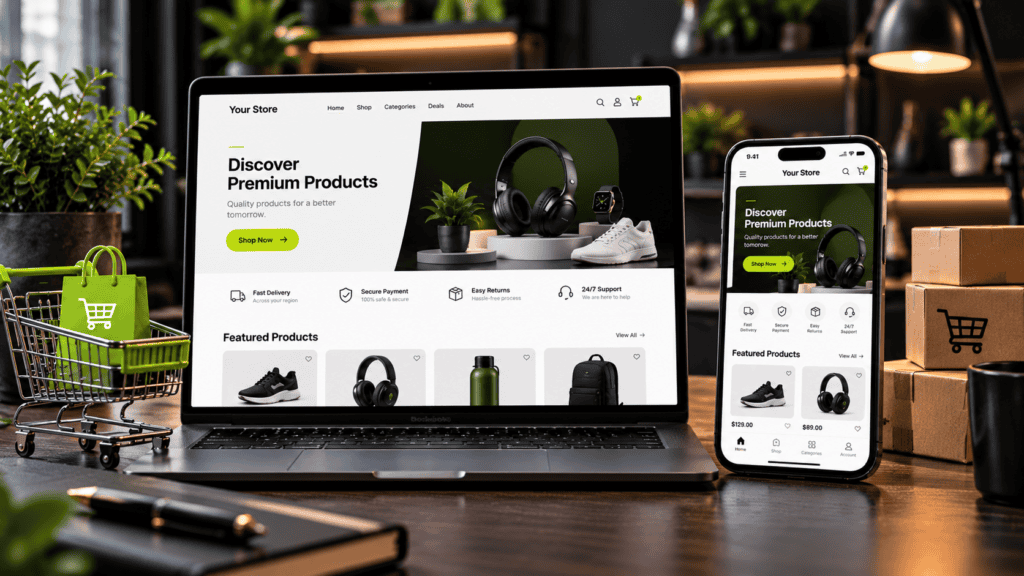
How to Choose the Right eCommerce Platform for Your Business in 2026
Choosing the right eCommerce platform is one of the most important decisions when starting an online business. Your platform affects how customers browse products, complete purchases, manage accounts, and interact with your brand. It also influences your ability to scale, introduce new features, and manage daily operations.
With several platforms available, choosing the best option can feel overwhelming. The right choice depends on your business model, budget, technical requirements, and long-term goals.
In this guide, we explore the key factors to consider when selecting an eCommerce platform for your business in 2026.
1. Understand Your Business Requirements
Before comparing platforms, define what your business actually needs.
For example, a small business selling a limited range of products may need a simple online store. A growing retailer may require advanced inventory management, multiple payment options, and integrations with shipping providers.
Consider these questions before making a decision:
- How many products will you sell?
- Will you sell locally, internationally, or both?
- Do you need multiple payment and shipping options?
- Will you manage the store yourself or work with a team?
- Do you need custom features or third-party integrations?
- How do you expect your business to grow over the next few years?
A clear understanding of these requirements will help you avoid choosing a platform that is either too limited or unnecessarily complex.
2. Compare Popular eCommerce Platforms
Different platforms serve different business needs. Here are three common options to consider.
Shopify: A Managed eCommerce Solution
Shopify is a popular choice for businesses that want to launch and manage an online store without maintaining their own hosting infrastructure.
It provides store management tools, product catalogues, order management, themes, and an app ecosystem for extending functionality.
Shopify may be suitable for:
- Startups launching their first online store.
- Established retailers expanding into online sales.
- Brands that want managed hosting and a streamlined store administration experience.
Keep in mind that subscription fees, payment processing, paid apps, and custom development can affect the overall cost.
WooCommerce: Flexible WordPress-Based Commerce
WooCommerce adds eCommerce functionality to WordPress, making it an option for businesses that want control over their website and content.
Its flexibility can be useful for stores that need custom layouts, content marketing, and specialised functionality. However, hosting, updates, backups, security, and performance require ongoing attention.
WooCommerce may be suitable for:
- Businesses already using WordPress.
- Content-driven brands that also sell products.
- Store owners who want extensive customisation options.
The total cost depends on hosting, extensions, maintenance, and development requirements.
Custom eCommerce Development: Built Around Specific Requirements
A custom eCommerce solution can be designed around a business’s unique workflows, integrations, and customer experience requirements.
It can be useful when existing platforms cannot efficiently support the required business logic. However, custom development generally requires more planning, testing, technical expertise, and ongoing maintenance.
Custom development may be suitable for:
- Businesses with specialised operational requirements.
- Companies requiring complex integrations.
- Platforms with unique workflows or advanced functionality.
A custom solution is not automatically better. It should be chosen when its benefits justify the additional investment and responsibility.
3. Calculate the Total Cost of Ownership
The initial setup cost does not tell the whole story. Consider the full cost of operating your store over time.
Your budget may need to cover:
- Platform subscriptions or hosting.
- Domain name and security.
- Theme design and custom development.
- Apps, plugins, and integrations.
- Payment processing and transaction fees.
- Maintenance, backups, and technical support.
Compare costs based on the features you actually need. A low-cost starting option may become expensive as your business grows, while an advanced solution may introduce unnecessary costs for a small store.
The goal is to choose a platform that fits your current budget and provides a practical path for future growth.
4. Prioritise User Experience and Mobile Responsiveness
Your online store should make it easy for customers to find products and complete purchases.
A professional eCommerce experience should include:
- Clear navigation and product categories.
- High-quality product images and useful descriptions.
- A simple, accessible checkout process.
- Responsive layouts for mobile devices.
- Fast-loading pages and helpful error messages.
- Clear shipping, return, and contact information.
Mobile responsiveness is especially important because customers may discover your products through social media, search engines, and mobile advertisements.
Before launching, test the complete customer journey on different screen sizes. Check product browsing, search, cart updates, checkout, and order confirmation.
5. Check Payment, Shipping, and Integration Options
Your eCommerce platform should support the tools your business depends on.
Depending on your market, you may need payment gateways, courier integrations, accounting software, inventory systems, email marketing tools, or customer relationship management software.
Before committing to a platform, verify that the integrations you need are available in your target countries and compatible with your business model.
Do not assume every payment gateway, shipping service, or app is supported everywhere. Confirm availability, fees, and any regional restrictions before building your store around a particular integration.
6. Think About SEO and Performance
A well-designed store also needs to be discoverable and technically reliable.
Look for features that support:
- Custom page titles and meta descriptions.
- Search-friendly product and category URLs.
- Image optimisation and descriptive alternative text.
- Appropriate redirects when URLs change.
- Structured data where supported.
- Mobile usability and fast page loading.
- XML sitemaps and search engine indexing controls.
No platform can guarantee higher search rankings on its own. Results depend on content quality, technical implementation, competition, and your broader SEO strategy.
Choose a platform that allows you to manage these fundamentals without creating unnecessary technical barriers.
7. Plan for Security and Future Growth
Your platform should support your business as product ranges, orders, and customer expectations change.
Consider whether you can add new sales channels, integrate additional services, improve store functionality, and manage increasing operational complexity.
Security matters just as much. Keep software and extensions updated, use strong account protection, restrict administrative access, and maintain reliable backups where applicable.
For managed platforms, understand the provider’s security responsibilities and the controls that remain yours. For self-hosted solutions, plan for server security, updates, monitoring, and maintenance.
8. Which eCommerce Platform Should You Choose?
There is no single best platform for every business. Use your requirements to narrow down the options.
- Choose Shopify if you want a managed commerce platform with store administration tools and an extensive app ecosystem.
- Choose WooCommerce if WordPress flexibility, content management, and control over your hosting environment are important to you.
- Consider custom development if your business needs specialised workflows or integrations that standard solutions cannot adequately support.
If you are unsure, list your essential features, compare the ongoing costs, and test a small prototype before making a long-term commitment.
Final Thoughts
Choosing the right eCommerce platform is about more than launching a website. It is about creating a reliable foundation for your products, customers, operations, and future business goals.
By understanding your requirements, comparing the total cost, prioritising user experience, and planning for growth, you can make a more informed decision.
At EpicSoft Studio, we help businesses build digital experiences through Shopify and eCommerce development, website design, mobile applications, and custom software solutions. We focus on understanding each business’s requirements before recommending an appropriate approach.
Planning to launch or improve your online store? Contact EpicSoft Studio to discuss your requirements and explore the right solution for your business.